Ecosystem / EmpRadar
Flagship product
Hire from one desk.
EmpRadar is Dafi Labs’ AI hiring platform: an applicant tracking system and a job marketplace. Recruiters get back up to 80–90% of the time that used to go to screening, sorting, and chasing. The team still makes the hire.
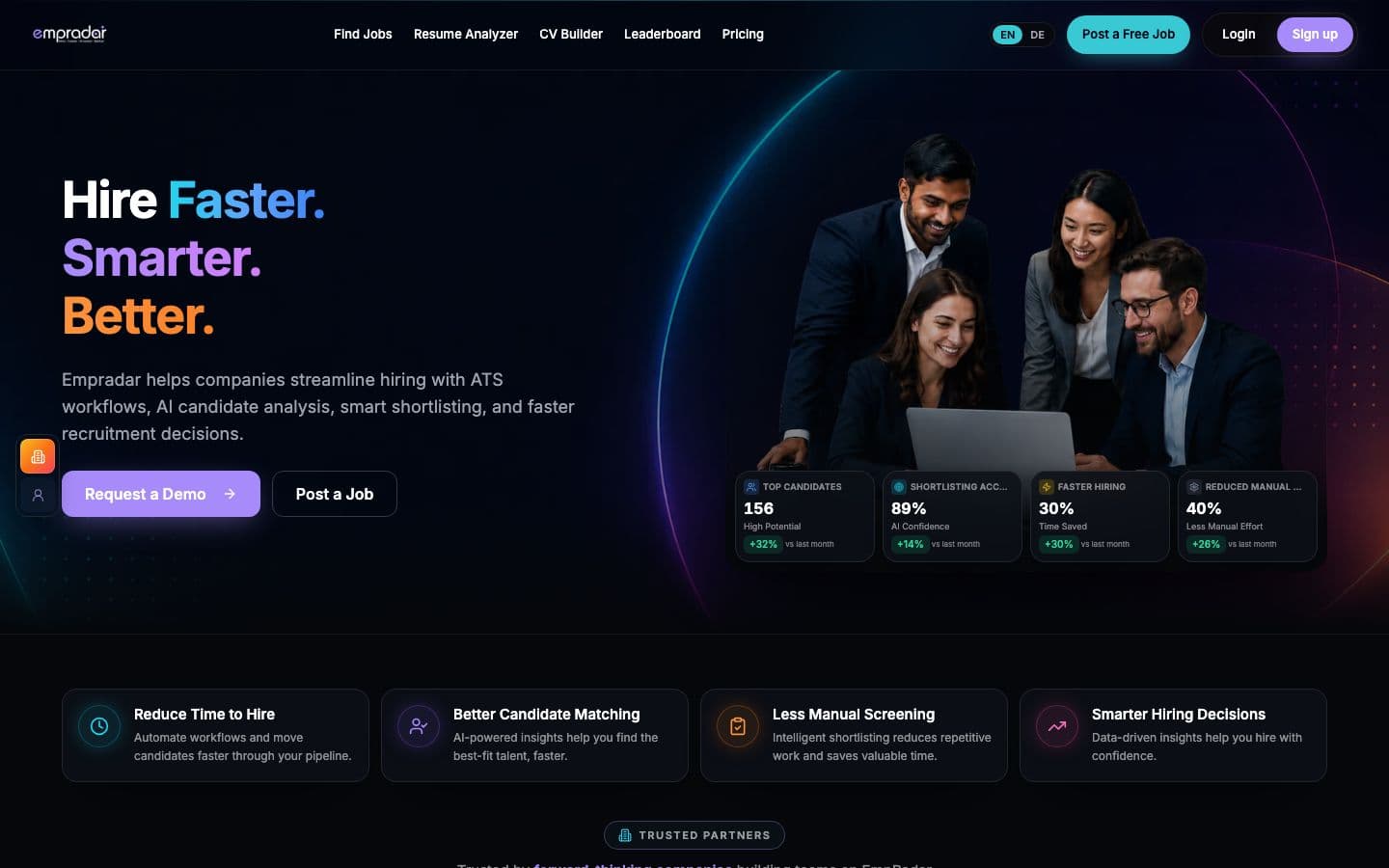
- 80–90%
- of recruiter screening time returned
- One
- workspace for pipeline, messages, and reports
- Radar
- nearby search for on-site and hybrid roles
- Emra
- the assistant for the day’s hiring decisions
What EmpRadar is
An ATS, a marketplace, and a decision.
EmpRadar, at empradar.ai, is built and operated by Dafi Labs Private Limited. Employers open a workspace, post jobs and internships, source people, score and compare candidates, and decide whom to hire. Candidates find roles, verify skills, and keep a profile employers can trust. The product site publishes the outcome as up to 80% faster hiring. On a recruiter’s week, the time returned is the screening, the sorting, and the chasing: up to 80–90%.
What the product actually does.
The live product, section by section. The full feature list sits under these screens.
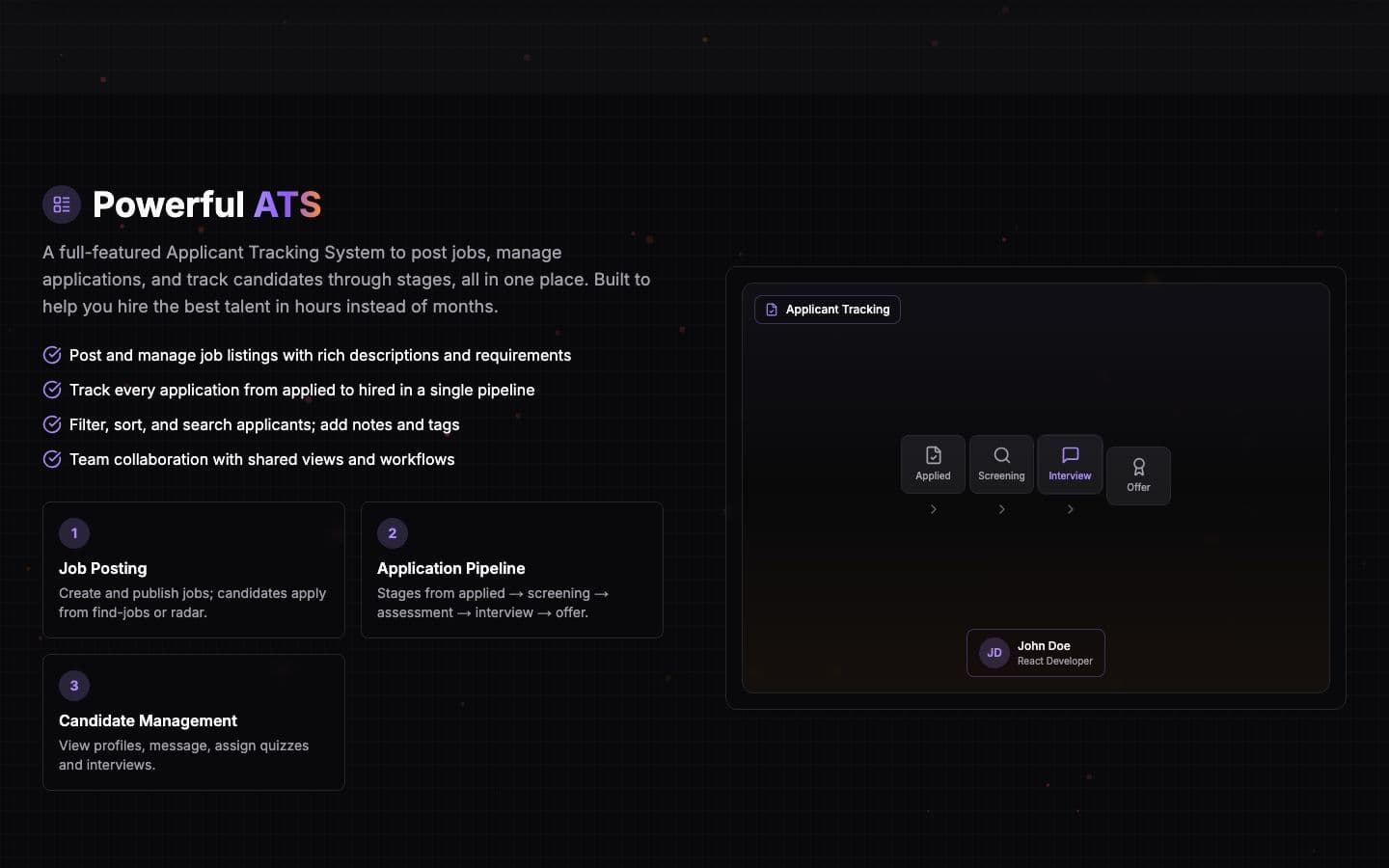
01 · The pipeline
Applicant tracking, from applied to offer.
The ATS is the spine. Post the role with the real requirements, share the stages with the team, and keep every application in one pipeline: applied, screening, assessment, interview, offer. Notes and tags stay on the person. Web applications, the careers site, and WhatsApp land in the same inbox, so nobody copies a candidate from one tool into another.
- Stages you can shape for each role
- One timeline of notes, messages, and decisions
- Every channel feeds the same pipeline
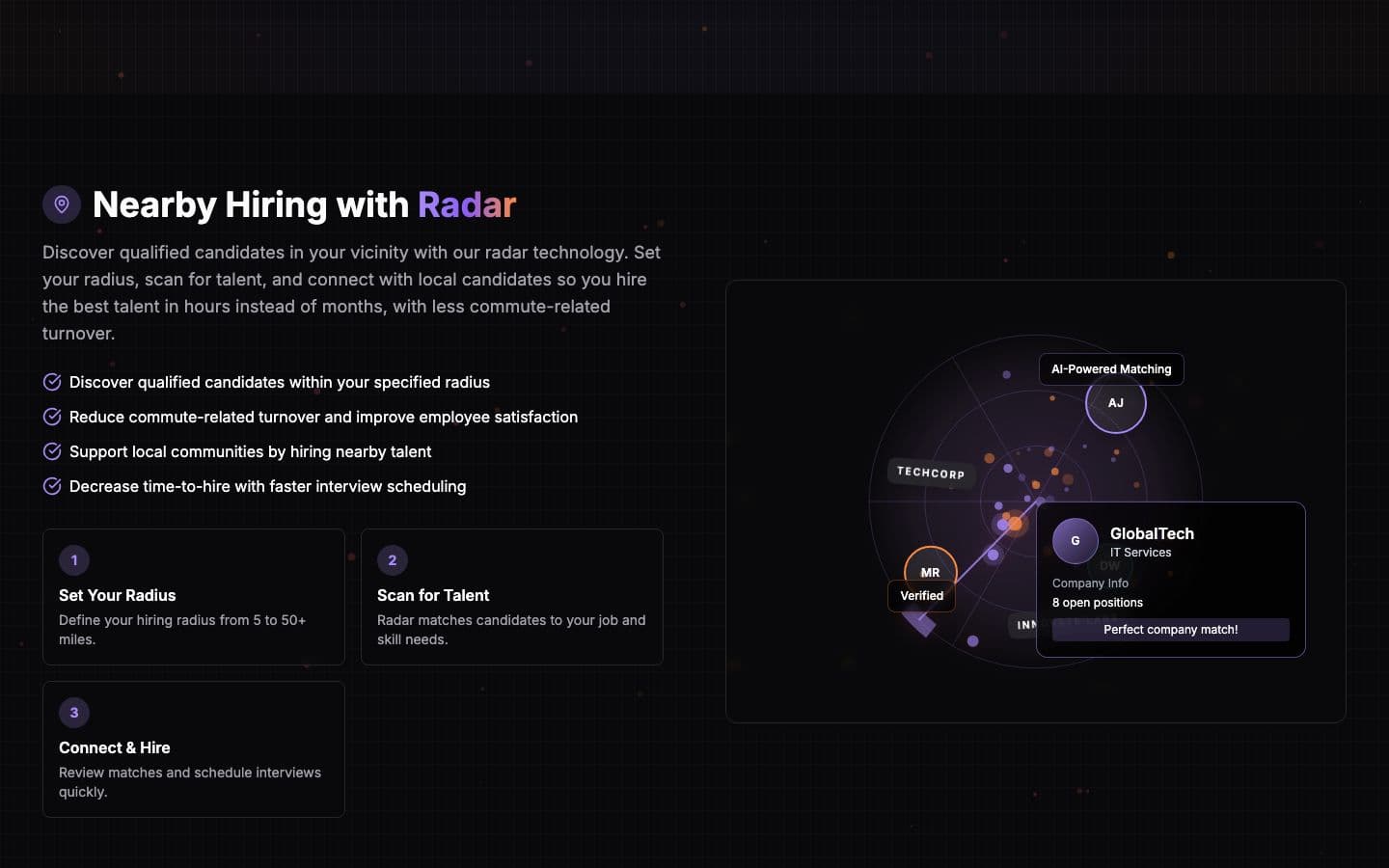
02 · Nearby search
A radar for people who can actually be there.
Nearby hiring is the radar. Set a radius, scan for people whose skills match the role, and keep on-site and hybrid hiring realistic. The point is local discovery: shorter travel, interviews you can book sooner, and less turnover that was really a commute. Auto-matching works the other way too — open roles find candidates, and candidates find roles — so the search is not a pile of filters.
- A radius you set, then a scan
- Useful for on-site and hybrid roles
- Two-way matching, jobs to people and people to jobs
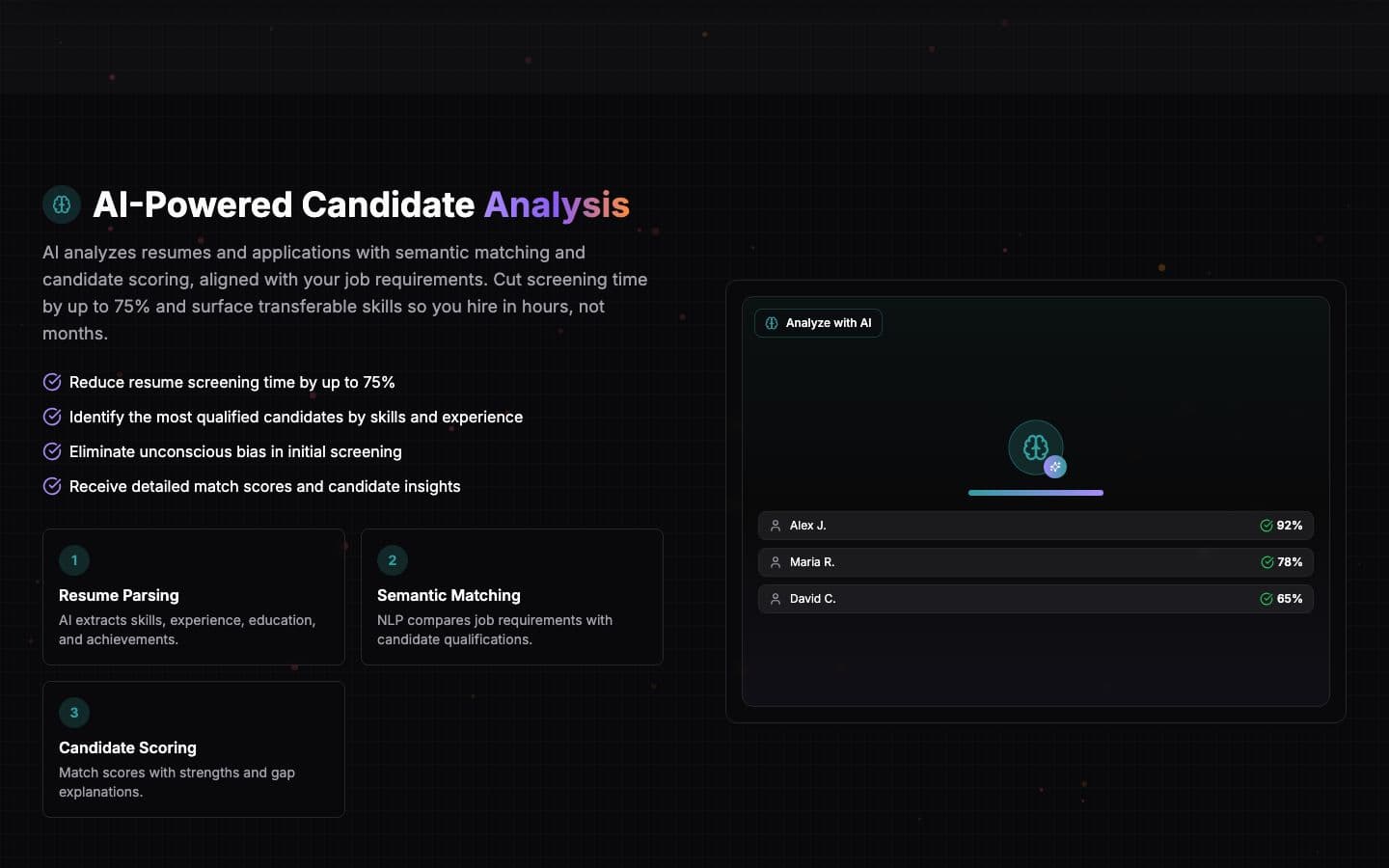
03 · Analysis
Read the candidates. Then put them side by side.
AI reads the CV against the job you actually posted, not a keyword list. Parsing pulls skills, experience, and education into one shape. Semantic matching returns a score, the strengths, and the gaps, in language a hiring manager can use. Compare people on that same desk: scores, verified skills, assessments, and notes. The shortlist is an argument you can have, not a folder of files.
- Resume parsing and a score you can explain
- Side-by-side comparison before the interview
- Screening time on the first pass cut sharply
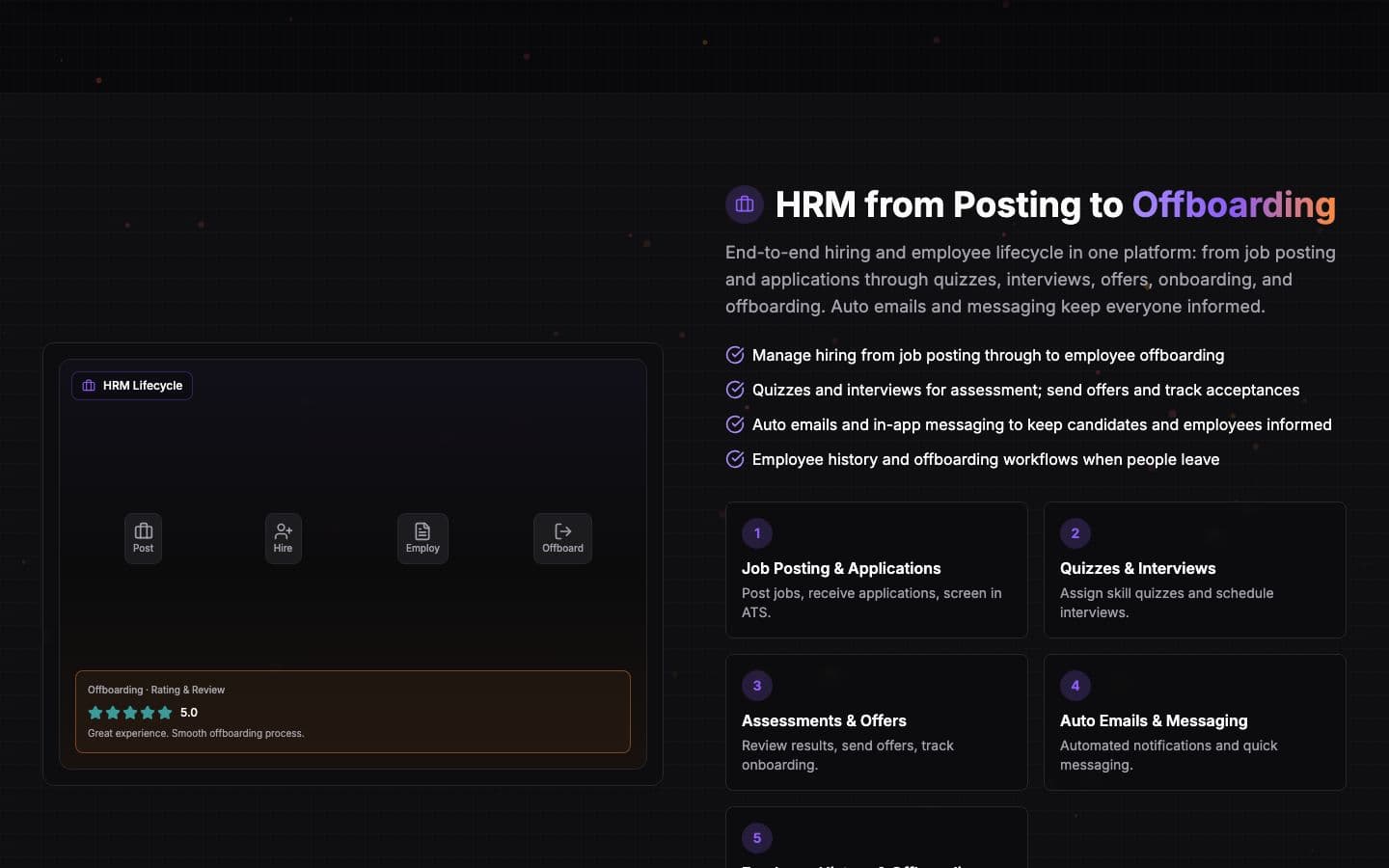
04 · Whom to hire
The decision, from the first hello to the offer.
This is the path that helps the team decide whom to hire. Recruiters and managers share one profile, one timeline, and one set of notes, from the first hello through interviews to the offer. Assessments sit next to the person, not in another vendor. Emra can point at who is ready to move and who needs another look. A person still makes the call. Offers and the follow-up stay in the same place, so the decision does not fall into someone’s inbox.
- One profile for the panel, not five versions
- Suggestions on who to move — the hire stays human
- Offer and follow-up on the same record
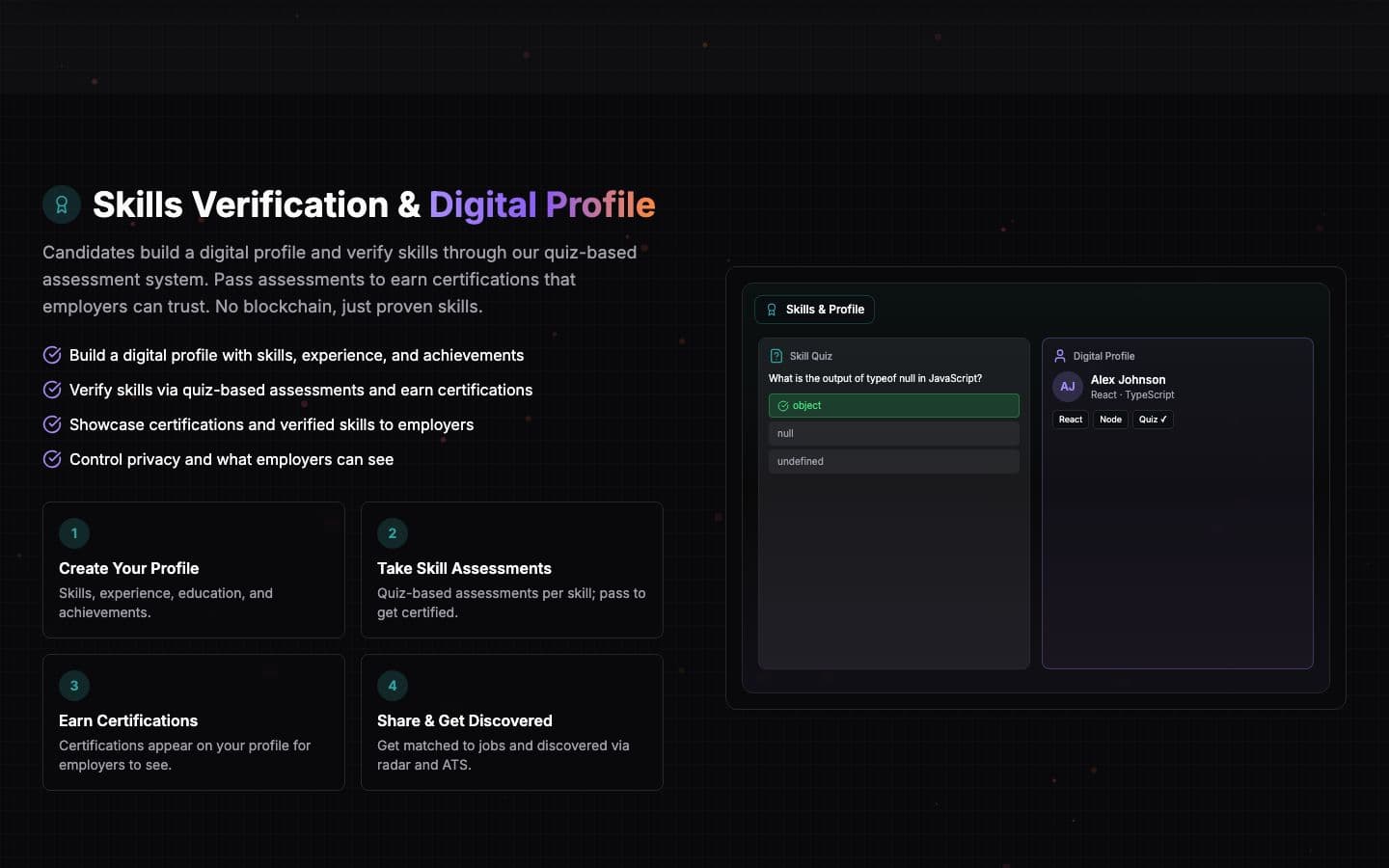
05 · Proof and presence
Certificates, documents, and a career page you design.
A candidate passes a skill quiz and EmpRadar issues the certificate onto the profile. Employers see verified skills instead of a claim. Teams design the templates — certificates, offers, and the documents the process sends — and the platform issues them from those designs, with the messages that keep people informed. The career page is the same system turned outward. Widgets put live jobs and the apply flow on your own site. Visitors stay on your brand. The application still lands in EmpRadar. A career chatbot answers pay, team, stack, and logistics from the copy you published, and the transcript stays searchable.
- Certificates issued when an assessment is passed
- Templates you design, documents the platform sends
- Career-page widgets and a chatbot on your site
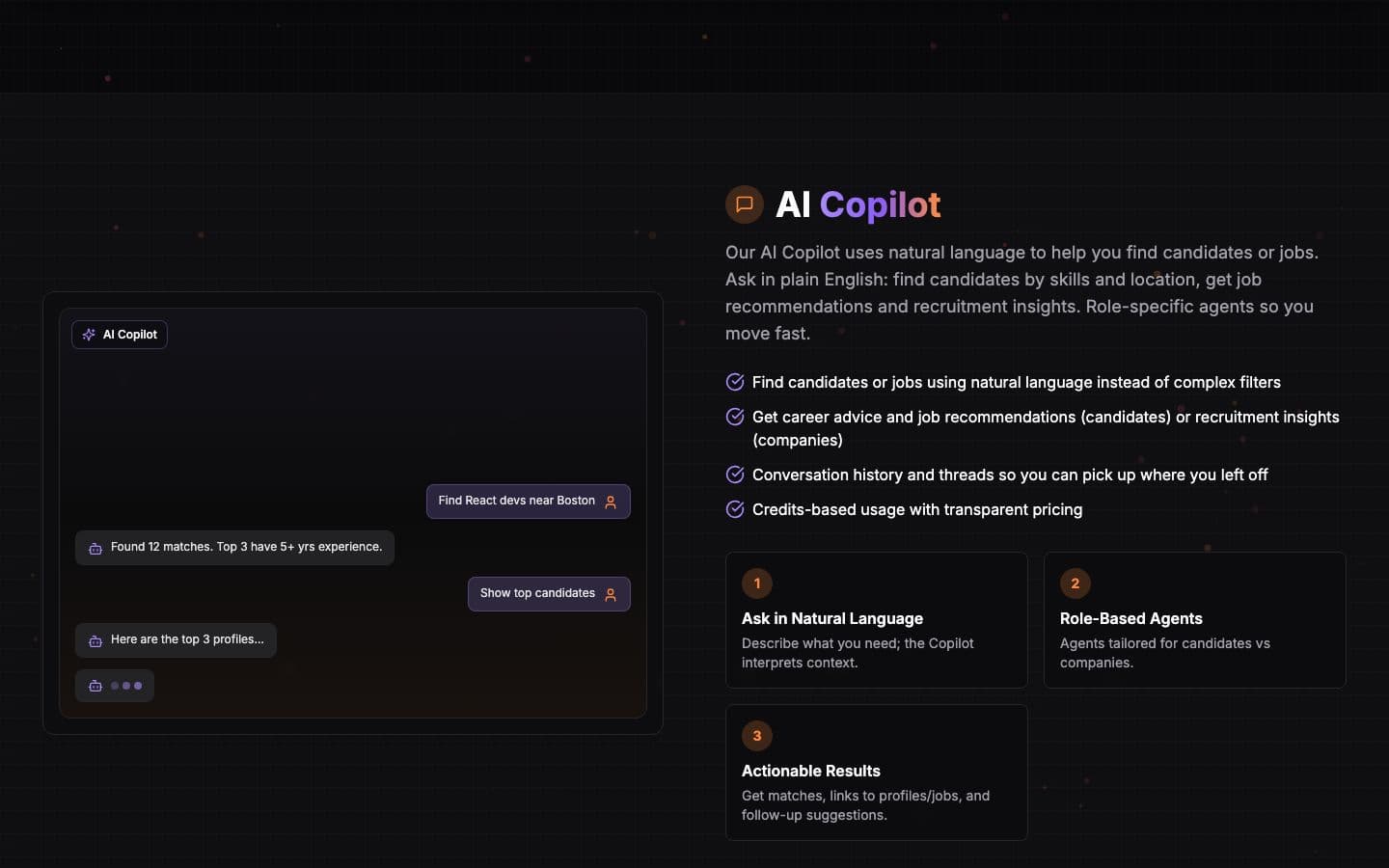
06 · Emra
Ask what changed today. Take it on a real call.
Emra is the AI inside EmpRadar. On empradar.ai it is the AI Copilot. Ask, in plain language, about today’s updates: who applied, who is stuck in a stage, which role is falling behind, and what the decision in front of you actually rests on. Take the overview on a real voice call when you want one. Emra drafts a job post from a short brief, summarizes a candidate for the panel, and compares options with skills, place, and fit. It does not hire anyone. The decision stays with the team.
- A briefing on the day’s pipeline
- Questions in plain language, including a voice call
- Drafts and summaries — the hire is still yours
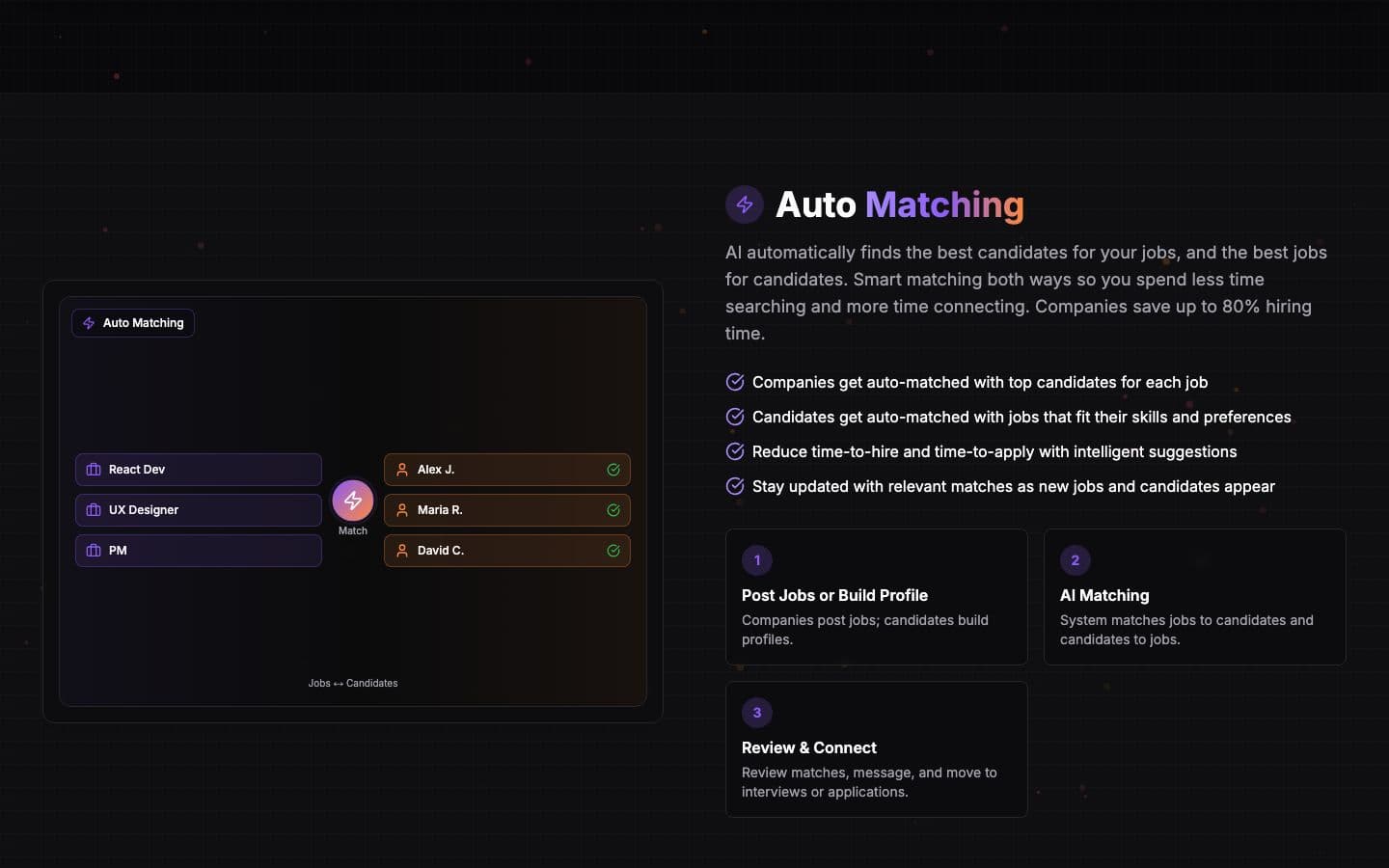
07 · Auto-matching
Jobs find people. People find jobs.
Matching runs both ways. A posted role is paired with people whose skills and preferences fit, and a candidate is paired with roles that fit them. EmpRadar publishes this as up to 80% less hiring time. New jobs and new people keep producing matches, so the shortlist does not wait on someone to run a search by hand.
- Companies matched to candidates for each job
- Candidates matched to roles that fit
- Review, message, and move a match into the pipeline
08 · Skill leaders
Compare verified talent, then pick.
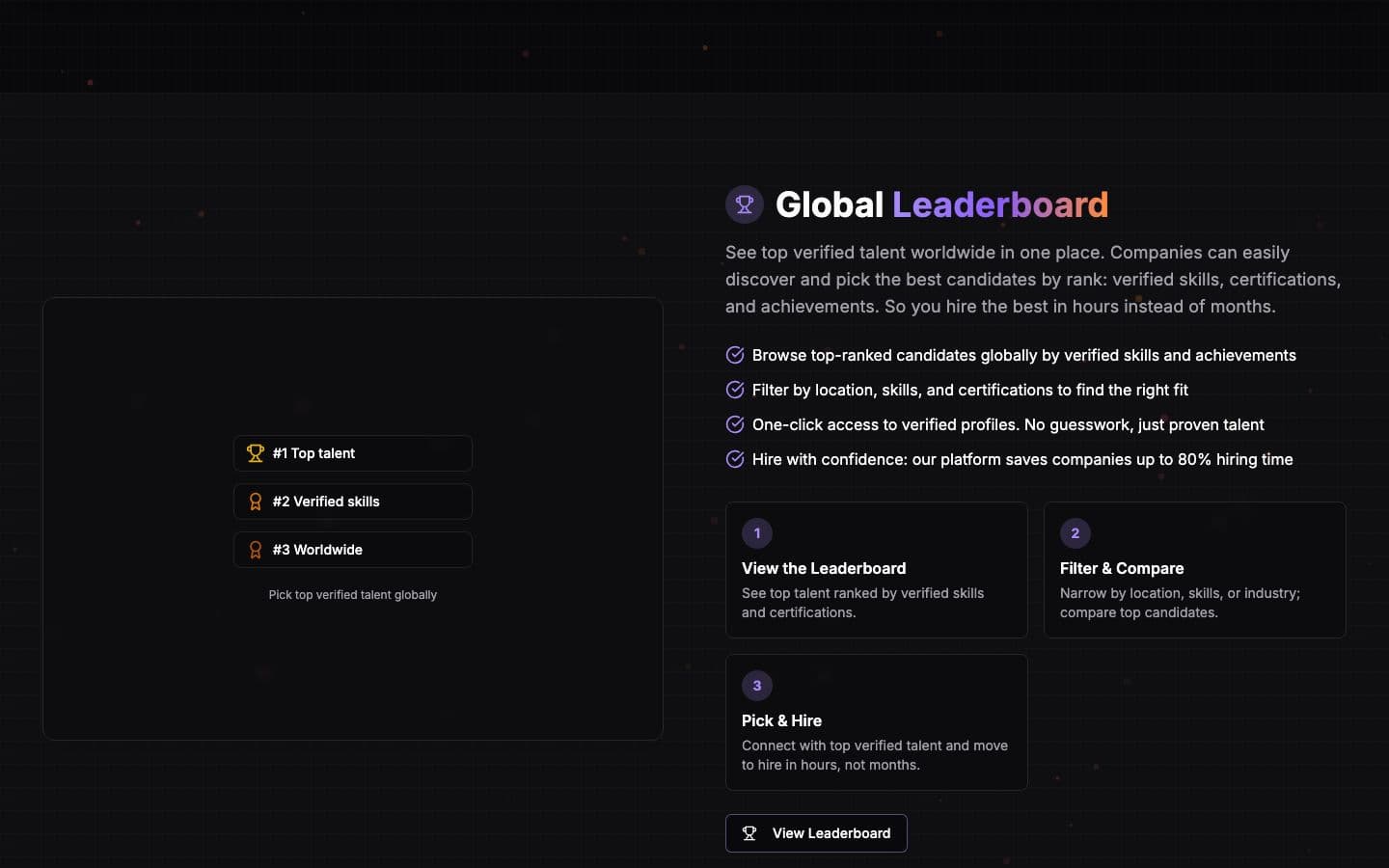
The leaderboard ranks verified talent by skills, certifications, and achievements. Filter by place, skill, or field and compare the people at the top before anyone is invited in. It is the public side of the same comparison a hiring team runs inside a role.
- Ranked by verified skills, not a keyword
- Filter by location, skill, and certification
- Open a profile and move them into a role
Every feature.
The list EmpRadar ships: the hiring workspace, then the tools around it. AI video interview is marked coming soon on the product. It is not live.
Talent bank and pools
Strong runners-up stay tagged and searchable for the next role, so the next search does not start from zero.
AI screening and analysis
CVs are read against the real job, ranked, and explained. EmpRadar says this cuts resume screening by up to 75%.
Job posts and the ATS pipeline
Stages run from applied through screening, assessment, interview, and offer. Notes, tags, and the team share one pipeline.
Onboarding to offboarding
Offers, onboarding, employee history, and offboarding stay on the same record, with the messages that keep people informed.
Verified talent and skills
A passed skill quiz puts a certificate on the profile. Employers see proven skills. EmpRadar does not use a blockchain for this.
Nearby hiring and radar
Set a radius, from 5 to 50+ miles, and scan for people who can work on-site or hybrid.
Auto-matching
Jobs find candidates and candidates find jobs. EmpRadar publishes this as up to 80% less hiring time.
Assessments and skills checks
Tests aligned to the role, scored before an interview is booked.
Interviews and messages
Scheduling, templates, and the candidate timeline in one place. The hiring pages also describe AI voice interview calls.
WhatsApp AI assistant
Candidates discover roles, ask questions, and apply in WhatsApp. Every reply lands in the same workspace as a web application.
Career page widget
Live jobs and the apply flow on your own site. Visitors stay on your brand. The application still lands in EmpRadar.
Hiring reports
Time in stage, sources, and pass rates, so the bottleneck is a number.
Career chatbot
Answers pay, team, stack, and logistics from the copy you published. The transcript stays searchable.
AI video interview
Structured video interviews. Marked coming soon on EmpRadar. It is not part of the live product yet.
Employer presence
Company profiles and branded jobs, so candidates see who is hiring before they apply.
Skill leaders
A leaderboard of verified talent. Filter by location, skill, or certification and compare before you invite anyone.
Emra, the AI Copilot
Ask in plain language about today’s pipeline, drafts, and the decision in front of you, including on a real voice call. Emra does not make the hire.
Chrome extension
The headhunting tool. Source people from LinkedIn, GitHub, and Behance into the talent bank without leaving the page already open.
Desktop tracker
The productivity tool for the recruiting day, beside the pipeline, so the team is not running a second system to know what happened.
Resume analyzer
A check of a CV, published on EmpRadar for candidates before a resume goes out.
CV builder
Templates for a candidate’s resume, on the same platform employers are already searching.
Career copilot
Guidance for candidates: roles, nearby jobs, and what to improve on the profile.
Document templates
Certificates, offers, and messages designed once. The platform issues them from those designs.
Two sides of the same platform.
Employers run the hire. Candidates find the role. Neither of them has to leave EmpRadar to do it.
For companies
A workspace with your branding and your team. Jobs, a pipeline, AI screening, interviews, a talent bank, and a report leadership can read.
- Startups hiring the first roles, and desks with high volume
- One login instead of an ATS, a screener, a test vendor, and a chatbot
- A candidate experience you can explain: fast replies, clear stages
For candidates
Jobs and internships, remote, hybrid, and on-site. A profile, skill quizzes, certificates, and matches that fit what you can actually do.
- Apply on the web, on a company’s career page, or in WhatsApp
- Verified skills on the profile, and a place on the leaderboard
- A copilot for roles, nearby jobs, and what to improve
How a hire moves.
The same path for the recruiter and the hiring manager. Everyone sees the same candidate.
- 01
Set up the company
Create the workspace, add the brand, and invite the team so the process does not depend on one person’s inbox.
- 02
Publish the role
Write it, or let Emra draft it from a brief. Set the location, the requirements, and the channels once.
- 03
Source and screen
Radar, auto-match, and the Chrome extension bring people in. AI ranks the CVs against the job before anyone reads the pile.
- 04
Assess
Send the quiz or the test. Scores land on the profile the panel will already have open.
- 05
Decide whom to hire
Compare the finalists, share notes, and make the call together. The suggestion is there. The decision is yours.
- 06
Issue what follows
The offer, the messages, and — when a skill is proven — the certificate. Templates you designed, sent from the platform.
Questions people ask before they switch.
What is EmpRadar?
EmpRadar is an AI hiring platform from Dafi Labs. It is an applicant tracking system and a job marketplace. Employers post roles, screen and compare candidates, and hire. Candidates find jobs and internships, verify skills, and apply. The product lives at empradar.ai.
Who makes EmpRadar?
Dafi Labs Private Limited designs, builds, and operates EmpRadar. The studio is in Lahore and works with organisations elsewhere. EmpRadar sits beside Emra Skills, Tech Skills Summit, and EmraOps in the same ecosystem.
How much recruiter time does EmpRadar save?
Recruiters get back up to 80–90% of the time spent screening, sorting, and chasing candidates. EmpRadar’s own site publishes the broader result as up to 80% faster hiring. The team still decides who is hired.
What is the Chrome extension for?
It is the headhunting tool. Recruiters source people from LinkedIn, GitHub, and Behance into the EmpRadar talent bank without leaving the page they are already on.
What is nearby hiring?
Nearby hiring is EmpRadar’s radar. You set a radius, scan for candidates who match the role, and hire locally when the job is on-site or hybrid.
What is Emra on EmpRadar?
Emra is EmpRadar’s AI assistant. The public product calls it the AI Copilot. You ask about today’s pipeline and the decision in front of you, in text or on a real voice call. It drafts, summarizes, and compares. It does not make the hire.
Can Dafi Labs build a hiring product like EmpRadar?
Yes. EmpRadar is the product you can use today. Dafi Labs also designs and builds a similar system for an organisation that needs the pipeline, the sourcing, the career page, and the assistant under its own name.
Use EmpRadar. Or have one built.
Open empradar.ai if this is the hiring system you want to run. If you need the same kind of product — the pipeline, the radar, the widgets, the assistant — under your own name, that is a studio engagement.